
Why Entrepreneurs Don’t Want Static Exporter Directories in 2026

For years, export support has followed a familiar pattern. Companies attend international trade shows, share their brochures, collect contacts, follow up after trade shows, and, at best, get listed in an outdated exporter directory on an official government website. The logic seems sound: visibility leads to leads, leads lead to sales, and sales support export growth.
But for many entrepreneurs operating in global trade, this model no longer reflects reality.
What exporters increasingly want is not another static directory, but something that actually helps them meet potential buyers, reach potential customers, and move faster in competitive markets, whether they are targeting one specific country or operating across the world. And in the age of digital technologies, entrepreneurs want the ability to update their information and offers in real time rather than relying on printouts to showcase what they can offer.
Static Listings No Longer Match How Exporters Work
Entrepreneurs don’t think in terms of maintaining a profile. They think in terms of momentum and connections.
From the exporter’s perspective, a static listing often feels like a dead end. A page is created, details are filled in, a date is stamped, and then nothing happens. There is no clear signal of who viewed it, whether any buyers searched for it, or if it helped match their products or services to real demand.
Over time, with cumbersome administrative hurdles to overcome, files go out of date, information gets deleted or ignored, and the listing becomes a static snapshot that no longer reflects the current reality of the business. What was meant to help ends up being another administrative issue.
Some agencies have already redesigned their directories around how exporters actually work.
The approach taken by Enterprise Ireland offers a practical example of what changes when static listings give way to active visibility.
Trade Events Create Energy, So How Can Directories Further Support This?
There’s a reason exporters still invest time and money in international trade shows and other events. At an exhibit, they can talk to a real person, answer questions in a shared language, and understand what buyers actually need. There is space for conversation, follow-up, and relationships.
Static directories don’t recreate that experience. They often feel disconnected from how exporters prepare, meet, and build trust with a potential client. Without interaction, exporters struggle to see the benefit of keeping listings up to date.
How Digital Directories Can Support Trade Shows Better
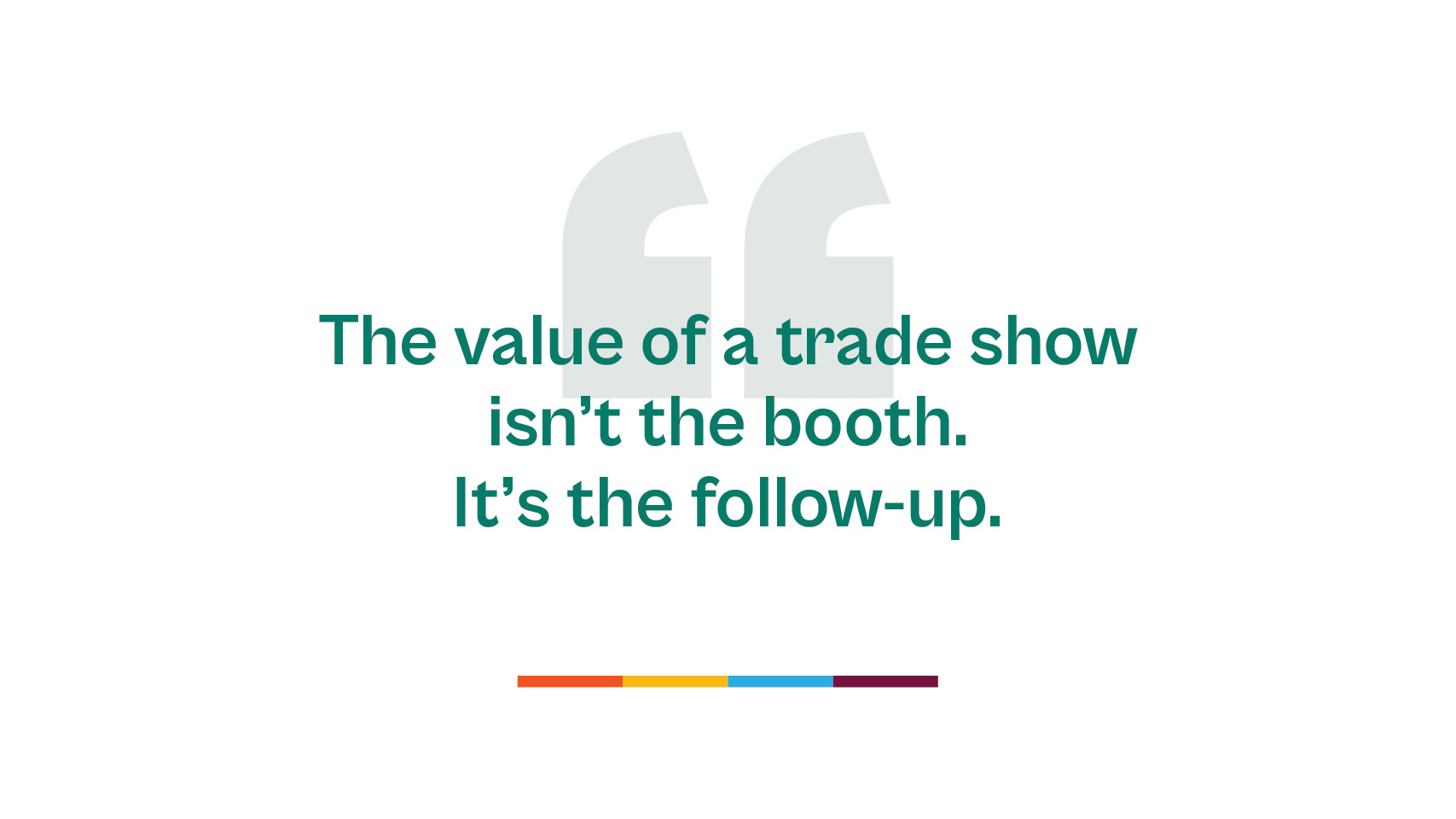
What trade shows lack is not relevance, but continuity. Once the event ends, momentum often dissipates quickly, leaving entrepreneurs to reconnect on their own with limited context and uneven follow-up.
Digital directories can significantly enhance the value of a trade show by extending its impact beyond the physical event.
Before a trade show, exporters want to know who might attend and whether it’s worth preparing for specific conversations. A searchable directory helps them identify relevant companies, understand who they want to meet, and prepare meaningful outreach instead of relying on chance encounters.
During the event, directories can act as a shared reference point. Instead of re-explaining their business from scratch, exporters can point interested contacts to a single place with consistent information, making conversations more focused and productive.
After the event, the real value emerges. Follow-ups are easier when both sides have a common point of reference. Relationships don’t reset once the booth is packed away; they continue with more context, clearer memory, and less friction.
For entrepreneurs, this turns a trade show from a one-off moment into a connected process. For agencies, it increases the return on events they already invest in, without changing the human nature of how business is built.
What Exporters Want Is Access, Not Administration
Most entrepreneurs don’t lack knowledge or ambition to drive new business. What they lack is access to the right buyers, at the right time, with the right context.
They want tools that:
- Help them find relevant opportunities
- Help buyers search and view them easily
- Help both sides learn enough to continue the conversation
When directories are designed primarily for reporting or compliance within international trade administration, exporters disengage. They don’t want to upload more files, manage another app, or follow rules that don’t clearly help them enter new markets.
Exporters Care About Signals, Not Listings
Entrepreneurs respond to signals of interest. A number of views, a message, a request to check availability, or an invitation to meet matters far more than being one name in a long list.
When there is no feedback loop, exporters lose confidence that the system works. They ignore reminders, stop updating content, or gradually leave the platform altogether.
This isn’t a motivation problem. It’s an ecosystem design problem.
What Exporters Actually Want Is Simpler Than It Sounds
Exporters don’t want complexity. They want something simple that fits the size of their team and the pace of their business.
They want:
- A clear way to present what they produce
- Confidence that buyers can find them
- Assurance that their information reflects how they operate inside their country and beyond
When directories help exporters move closer to real conversations and real trade, participation follows. When they don’t, engagement fades, no matter how carefully the platform was deployed.
The Shift Export Agencies Are Starting to Make
Some agencies are beginning to recognize that exporter participation cannot be enforced; it has to be earned.
Instead of treating the directory as a project to complete, they treat it as a living layer that supports discovery, filters out what’s not relevant, and helps buyers and exporters meet with confidence.
That shift from static presence to active visibility is the key change entrepreneurs are responding to.
International Trade Requires Both Offline and Online Strategies
The reality is that international trade no longer happens in a single setting. Conversations start in one place, continue elsewhere, and often conclude far from where they began.
Trade shows and in-person meetings remain important, but they now coexist with online research, virtual introductions, and ongoing digital communication. Buyers might hear about a company at an event, look them up online later that evening, and decide whether to follow up days or weeks afterward.
When trade promotion relies solely on offline moments, opportunities are lost. If the only interaction happens on the show floor, relationships often take too long to solidify or fade entirely once people return to their routines.
Entrepreneurs understand this intuitively. They are used to building relationships across channels. They expect that introductions can happen online, that credibility can be checked digitally, and that conversations can continue without waiting for the next event.
For agencies, this means thinking beyond the event itself. Offline and online strategies should reinforce each other: events create energy and trust, while digital touchpoints help relationships mature faster and more reliably.
When these two worlds are treated as separate, trade promotion feels fragmented. When they work together, exporters and buyers can move from first contact to real opportunity with far less delay.
Conclusion:
Exporters don’t resist directories because they dislike structure. They resist tools that don’t help them move forward. When a directory helps exporters connect with buyers, support ongoing relationships, and create momentum beyond a single place or state, they engage. When it feels like administration without outcome, they disengage.
The future of export promotion will not be defined by how many profiles exist on a website of the international trade office, but by whether those profiles help real businesses continue, grow, and compete in a changing global economy.
Want to see how this thinking translates into practice?


Browse more topics from this article
Heading 1
Heading 2
Heading 3
Heading 4
Heading 5
Heading 6
Lorem ipsum dolor sit amet, consectetur adipiscing elit, sed do eiusmod tempor incididunt ut labore et dolore magna aliqua. Ut enim ad minim veniam, quis nostrud exercitation ullamco laboris nisi ut aliquip ex ea commodo consequat. Duis aute irure dolor in reprehenderit in voluptate velit esse cillum dolore eu fugiat nulla pariatur.
Block quote
Ordered list
- Item 1
- Item 2
- Item 3
Unordered list
- Item A
- Item B
- Item C
Bold text
Emphasis
Superscript
Subscript
Heading 1
Heading 2
Heading 3
Heading 4
Heading 5
Heading 6
Lorem ipsum dolor sit amet, consectetur adipiscing elit, sed do eiusmod tempor incididunt ut labore et dolore magna aliqua. Ut enim ad minim veniam, quis nostrud exercitation ullamco laboris nisi ut aliquip ex ea commodo consequat. Duis aute irure dolor in reprehenderit in voluptate velit esse cillum dolore eu fugiat nulla pariatur.
Block quote
Ordered list
- Item 1
- Item 2
- Item 3
Unordered list
- Item A
- Item B
- Item C
Bold text
Emphasis
Superscript
Subscript
Heading 1
Heading 2
Heading 3
Heading 4
Heading 5
Heading 6
Lorem ipsum dolor sit amet, consectetur adipiscing elit, sed do eiusmod tempor incididunt ut labore et dolore magna aliqua. Ut enim ad minim veniam, quis nostrud exercitation ullamco laboris nisi ut aliquip ex ea commodo consequat. Duis aute irure dolor in reprehenderit in voluptate velit esse cillum dolore eu fugiat nulla pariatur.
Block quote
Ordered list
- Item 1
- Item 2
- Item 3
Unordered list
- Item A
- Item B
- Item C
Bold text
Emphasis
Superscript
Subscript
Heading 1
Heading 2
Heading 3
Heading 4
Heading 5
Heading 6
Lorem ipsum dolor sit amet, consectetur adipiscing elit, sed do eiusmod tempor incididunt ut labore et dolore magna aliqua. Ut enim ad minim veniam, quis nostrud exercitation ullamco laboris nisi ut aliquip ex ea commodo consequat. Duis aute irure dolor in reprehenderit in voluptate velit esse cillum dolore eu fugiat nulla pariatur.
Block quote
Ordered list
- Item 1
- Item 2
- Item 3
Unordered list
- Item A
- Item B
- Item C
Bold text
Emphasis
Superscript
Subscript
Heading 1
Heading 2
Heading 3
Heading 4
Heading 5
Heading 6
Lorem ipsum dolor sit amet, consectetur adipiscing elit, sed do eiusmod tempor incididunt ut labore et dolore magna aliqua. Ut enim ad minim veniam, quis nostrud exercitation ullamco laboris nisi ut aliquip ex ea commodo consequat. Duis aute irure dolor in reprehenderit in voluptate velit esse cillum dolore eu fugiat nulla pariatur.
Block quote
Ordered list
- Item 1
- Item 2
- Item 3
Unordered list
- Item A
- Item B
- Item C
Bold text
Emphasis
Superscript
Subscript






.png)


