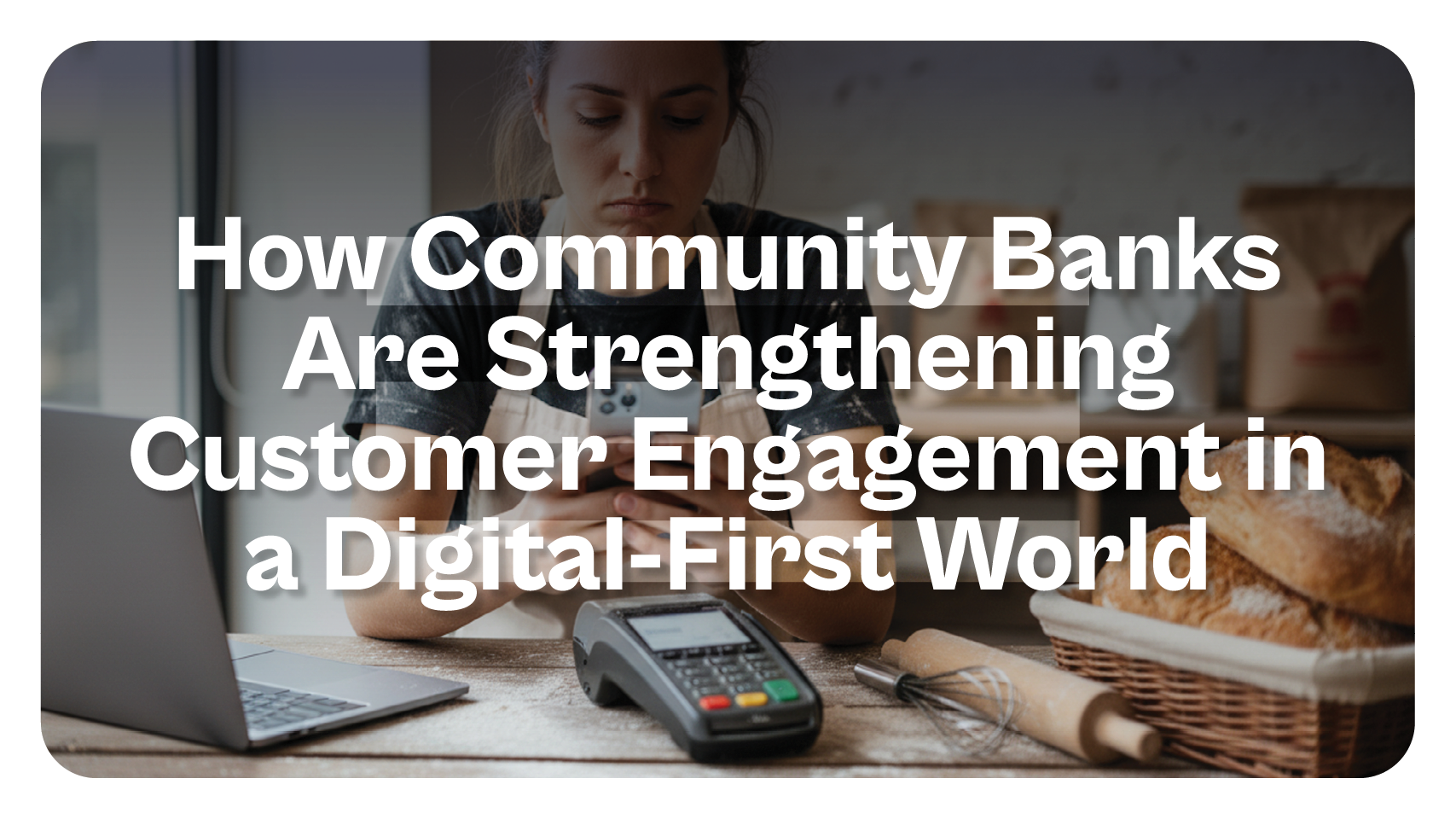
Why Banks Are Expanding Value-Added Services for Small Business Customers

Banks are expanding their value-added services and business banking offerings to meet changing customer expectations and strengthen relationships with small business customers.
Today’s small business owners expect more than traditional banking services. They need tools and support that help them manage cash flow, streamline operations, and grow their business.
Leading financial institutions are responding by offering:
- Operational tools and integrations such as payment processing, payroll services, and money management solutions
- Digital banking services that support online banking, mobile banking, and real-time access to accounts
- Advisory support and financial education to help businesses make informed decisions
- Access to trusted partners and service providers through curated ecosystems
- Additional services and exclusive deals that deliver real value beyond core banking products
Banks adopting this approach are building deeper relationships, improving customer satisfaction, and positioning themselves for long-term success in small-business banking. Customer retention is top of mind for every banker, but before we can optimize retention, we must improve the value business customers currently receive. And that's the focus for this article.
For decades, business banking followed a familiar model. Banks offered a business checking account, a savings account, lending products, and a core set of banking services designed to support basic financial needs.
That model still matters, but it is no longer sufficient on its own.
Small businesses today operate in a very different environment. They rely on digital tools to manage payments, track expenses, and coordinate day-to-day operations. Many also work with multiple financial service providers, including alternative lenders, payment platforms, and software providers that offer specialized financial solutions.
As a result, traditional banking services have become easier to compare and, in many cases, easier to replace.
This shift has raised the bar for financial institutions. Competing on interest rates or basic service offerings is no longer enough to differentiate in a market where business owners have access to a broad range of options.
Recommended Read: How to Attract Small Business Banking Customers

What Do Small Businesses Actually Need From Their Bank?
Running a small business means constantly balancing operational demands with financial decisions.
Business owners are managing customer payments, payroll services, vendor relationships, and working capital, often all at once. They are also navigating changing market conditions, fluctuating interest rates, and the pressure to maintain steady revenue growth.
In this environment, the role of the bank becomes more practical.
Small businesses need banking partners that help them:
- manage cash flow and monitor business finances
- handle payment processing and payment requests efficiently
- access payment solutions and digital wallets when needed
- support international transactions or trade finance for expansion
- streamline operations with tools that reduce manual work
These needs go beyond traditional products. They reflect a growing demand for value added services that support how businesses actually operate.
What Value-Added Services Look Like in Practice
When banks expand their service offerings, the goal is not simply to add more products to a list. They do it to become more useful in the day-to-day financial life of the business.
For most small business owners, banking is not something they think about in isolation. It's part of a broader set of activities that includes collecting payments, paying employees, managing vendors, and keeping track of cash flow. The more directly a bank supports those activities, the more central it becomes to the business's operations.
Take payment processing as an example. When a bank offers merchant services that integrate smoothly with how a business accepts customer payments, it reduces friction in one of the most frequent and critical parts of the business cycle. The same applies to payroll services. If a business can manage employee payments and reporting through systems that connect easily with its accounts, it simplifies a task that happens every pay period.
Treasury management tools play a similar role. They are not just about reporting balances. They help businesses manage money more deliberately by timing payments, monitoring inflows, and maintaining enough liquidity to operate without disruption. For a growing company, that level of control can make a meaningful difference.
Other services, such as fraud protection, investment tools, or support for international transactions, tend to become more important as businesses scale. A company expanding into new markets or handling larger volumes of transactions begins to care more about risk, efficiency, and long-term financial planning.
Some banks also provide access to multi-currency accounts or trade finance capabilities, which can remove barriers for businesses working across borders. These are not everyday needs for every company, but when they become relevant, they often influence which institution the business relies on most.
Alongside these operational services, there is also a growing role for financial education and expert guidance. Many business owners value having access to financial advisors who can help them interpret their numbers, plan for growth, and make informed decisions about their business finances. This kind of support builds confidence and strengthens the relationship over time.
What connects all of these services is not the individual features themselves, but the role they play in helping a business run more smoothly. When a bank supports both the financial and operational aspects of a company, it moves from being a service provider to becoming part of the infrastructure the business depends on.
Why Fintech Platforms Are Winning This Layer
Many fintech platforms have grown quickly by focusing on the operational side of business.
Instead of positioning themselves purely as financial institutions, they offer tools that help businesses manage payments, automate workflows, and integrate financial activity into everyday operations.
This approach aligns closely with how businesses actually work.
For example, a business may rely on a banking app, mobile banking apps, or platforms downloaded through Google Play to manage transactions in real time. These tools often combine payments, reporting, and analytics into a single interface that is easy to use.
Traditional banks, including community banks and private banking institutions, are now adapting to this shift as part of broader digital transformation efforts.
The lesson for banks, regardless of size, is that they need to meet evolving customer expectations in a way that fits their role as trusted financial partners.
How Banks Can Offer More Without Building Everything
For most banks, the question is not whether additional services are valuable. That is already understood. The real challenge is how to introduce those capabilities in a way that fits within the constraints of the institution.
Expanding service offerings is rarely just a product decision. It touches multiple parts of the organization. Technology teams have to evaluate integration and maintenance requirements. Risk and compliance teams need to understand how new services affect oversight and regulatory expectations. Finance teams look at cost, return, and how any new initiative fits into broader priorities.
In that context, building new capabilities internally can be difficult to justify. Even relatively small features can take months to move from concept to launch once development timelines, internal approvals, and testing requirements are considered. For community banks and many regional institutions, these efforts often compete with more immediate priorities such as core system upgrades, security initiatives, or regulatory projects.
This is why many banks are becoming more deliberate about how they expand beyond traditional banking services.
Rather than approaching every new capability as something that must be built, banks are increasingly evaluating where it makes more sense to connect customers with existing solutions. In practice, this often means working with external service providers that already specialize in areas like payment processing, payroll services, or financial tools that support business operations.
This approach changes the nature of the decision. Instead of asking how to build and maintain a new product, the focus shifts to how to select the right partners, how to present those services to customers, and how to ensure the experience remains consistent with the bank’s brand and standards.
There are still considerations. Vendor selection requires due diligence. Integration needs to be simple enough that it does not introduce unnecessary operational complexity. The customer experience must feel cohesive rather than fragmented across multiple providers.
But at the same time, this model offers flexibility that internal development often cannot. Banks can expand their service offerings without committing to long development cycles or large upfront investments. They can adjust over time as customer needs change, replacing or adding services without having to rebuild systems from scratch.
For many institutions, this is becoming a more practical way to respond to evolving customer expectations and improve customer satisfaction. It allows them to extend the value they provide to business clients while staying focused on their core role as a trusted financial partner.

Turning the Bank Into a Business Hub
As banks expand their approach, a new model is emerging. Rather than acting solely as a provider of financial products, the bank becomes a central hub where business clients can access a range of services that support their operations.
This may include:
- connections to trusted partners and vendors
- access to exclusive deals on software or professional services
- integrated tools that help businesses manage payments and operations
- curated resources that support business growth
In this model, the bank remains the primary relationship while enabling clients to access a wider ecosystem of support.
This shift plays a crucial role in strengthening client relationships. When businesses rely on their bank for more than just accounts and loans, the relationship becomes more embedded in their daily operations.
Over time, that connection helps deepen relationships, increase customer loyalty, and reinforce brand trust.
What This Looks Like in Practice
A business banking team begins to notice that some of their small business clients are active but not fully engaged. Accounts are open, balances may be stable, and the relationship appears healthy at a glance. But when they look more closely at transaction activity, it becomes clear that a significant portion of the business’s financial operations is happening elsewhere.
Customer payments may be handled through a separate payment platform. Payroll services might run through an external provider. Expense tracking and reporting could sit inside accounting software that has little connection to the bank. The business is still a client, but the bank is no longer central to how that business operates day to day.
When these patterns emerge, the conversation inside the bank usually shifts.
Relationship managers may hear directly from clients about the tools they rely on and the gaps they experience. Product and digital teams begin to look at where the bank’s current service offerings fall short of supporting those workflows. Leadership starts to ask a broader question: how can the bank become more relevant to the way its business clients actually run their operations?
At that point, the discussion often turns to how new capabilities should be introduced.
One path is to build. That means defining requirements, allocating development resources, and committing to timelines that can extend over multiple quarters. For some initiatives, that approach makes sense. But for many operational services, it raises practical concerns around cost, maintenance, and competing priorities.
The alternative is to work with external service providers that already offer solutions in areas like payment processing, payroll services, or financial tools. This approach introduces a different set of considerations, including vendor selection, integration simplicity, and ensuring that the customer experience remains consistent with the bank’s standards.
In most cases, the conclusion is not that the bank should replace its core offerings, but that it should find ways to extend and expand them. The banks that move in this direction often begin by identifying a small number of areas where their business clients need the most support. From there, they look for ways to connect those clients with trusted partners or additional services that align with those needs.
Over time, these incremental changes can shift how the bank is perceived. Instead of being one of several providers a business uses, the bank becomes more closely tied to the systems and services that support the company’s daily operations.
Although this is the common way the shift happens, it won't be all at once. But it is often what determines whether a bank remains part of a business’s financial life or becomes less relevant as the business grows.
A Final Consideration for Banking Leaders
As small business banking continues to evolve, the distinction between financial services and business operations is becoming less clear.
The banks that remain relevant are not necessarily the ones offering the most products, but the ones that align most closely with how their clients actually run their businesses. When a bank supports payments, financial decisions, and the tools a business depends on every day, it becomes part of that company’s operating rhythm.
That position is difficult to replace.
For many institutions, the challenge and opportunity beforehand is how to expand beyond traditional services in a way that fits within existing constraints while still delivering meaningful value to clients.
If that's the phase you're in, we recommend experimenting with a turnkey curated marketplace first. You can learn more about how banks are using curated vendor ecosystems to support small business clients with tools, services, and resources that go beyond traditional banking.