
What Is Rewards-as-a-Service Banking? (And Why It Matters Now)

Across the banking industry, loyalty structures are being reexamined.
For decades, bank rewards programs were largely tied to a credit card, everyday spending, and the accumulation of loyalty points. A rewards program might offer cashback rewards, travel redemptions, or statement credits based on account balances or transaction volume.
These models worked well in a relatively stable environment where incentives were predictable, and customer expectations were limited to financial rewards.
That environment is shifting and expanding rapidly into a new direction. Today’s banking customers evaluate their bank through a much wider lens. They compare their experience not only to other financial institutions but to retail brands and digital platforms that offer immediate financial benefits, personalized rewards, and seamless integration across services.
Customer expectations now extend beyond earning points. They include relevance, flexibility, and measurable value.
At the same time, the financial services industry is navigating new structural pressures. Regulatory developments, innovation in financial technology, and shifting funding dynamics are changing how institutions think about incentives. What once functioned as a marketing tool now carries implications for compliance, reporting, and long-term customer relationships.
In this context, rewards-as-a-service banking represents a structural evolution. It moves loyalty programs out of isolated promotional campaigns and into infrastructure where reward logic, reporting, and vendor-backed value can be managed deliberately rather than reactively.
The shift is subtle but significant. When rewards become infrastructure, they support customer satisfaction and customer loyalty without overcomplicating deposit strategy or distorting product economics.
They become part of how financial institutions design customer relationships rather than a temporary lever to attract new customers.
Understanding this distinction is critical for any institution reassessing its loyalty strategy in a rapidly evolving financial services sector.
Rewards as a Service in Banking: A Structural Definition
Rewards-as-a-service is not simply a modern loyalty program. It is an infrastructure layer that enables financial institutions to design, deploy, monitor, and adapt rewards without embedding them directly into deposit structures or legacy systems.
Instead of relying on balance-sheet-driven financial rewards such as cashback rewards or deposit bonuses, this model separates reward logic from core settlement and funding systems. It allows banks to:
- Launch vendor-backed or third-party funded rewards
- Track key performance indicators tied to customer engagement
- Monitor reward issuance and redemption
- Protect customer data through robust security measures
The distinction is important. A rewards program built as infrastructure is flexible, auditable, and scalable.
How Does This Differ From Traditional Bank Rewards Programs?
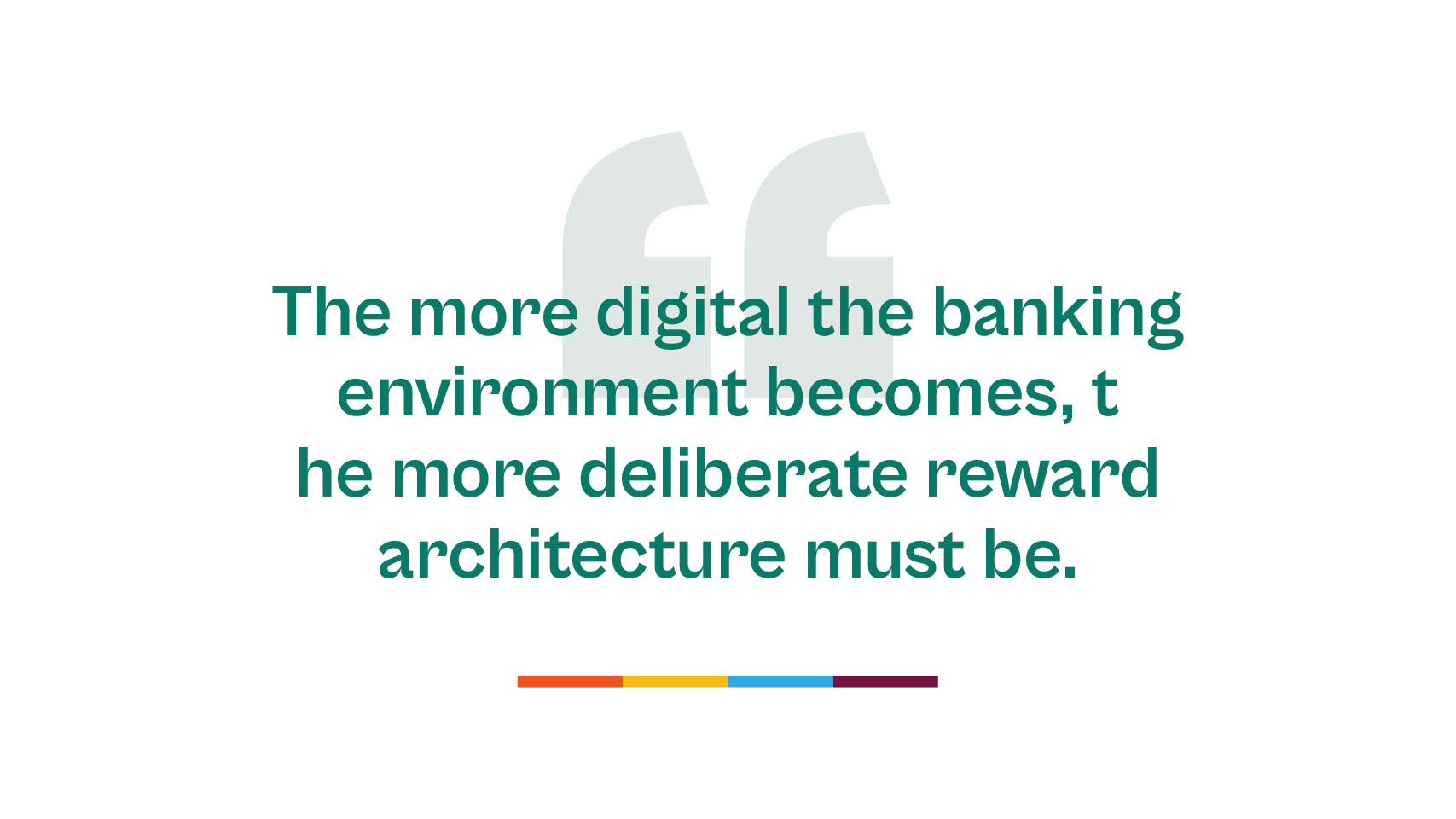
Most bank rewards programs in the financial services industry evolved from credit card loyalty points. Examples such as Chase Ultimate Rewards illustrate how the traditional reward systems focused on everyday spending and redemption point mechanics tied to online payment card transactions.
These models are effective for consumer credit, but they often struggle to meaningfully extend to business banking or savings accounts.
Traditional reward systems typically:
- Tie incentives to credit card volume
- Offer standardized loyalty points
- Focus on cashback rewards
- Depend heavily on customers’ monthly balance or monthly account fees
While these structures can promote customer satisfaction, they are limited in scope. They are often designed as marketing tools rather than operational infrastructure.
An effective loyalty program today must do more than reward transactions. It must reflect customer behavior, customer preferences, and individual customer preferences across multiple financial products.
Customer Satisfaction and Customer Loyalty in a Modern Banking Context
Customer loyalty programs once relied on straightforward financial benefits: earn rewards, accumulate loyalty points, and redeem for travel or statement credit.
Today, customers feel valued when rewards align with their actual everyday needs.
Small businesses may prioritize operational savings over points. Consumers may prefer fee reductions or personalized rewards tailored to spending habits. Allowing customers to choose from curated options increases customer engagement and improves the overall customer experience.
Rewards-as-a-service supports this by enabling financial institutions to use customer data responsibly to design modern loyalty programs that reflect real usage patterns. This approach strengthens customer relationships without altering deposit funding structures.
In practice, innovative loyalty programs now focus on:
- Rewarding loyal customers beyond credit card activity
- Supporting business growth through vendor discounts
- Offering flexible rewards accounts
- Delivering measurable customer acquisition and customer retention outcomes
A successful bank reward program today is measured not just by redemption rates, but by net promoter score (NPS), customer lifetime value, and continued engagement among loyalty program members.
Why the Banking Industry Is Moving Toward Infrastructure-Based Rewards
With increasing complexity, growing regulatory scrutiny, stablecoin developments, financial technology innovation, and heightened attention to safeguarding assets, financial institutions are reshaping how they approach incentives.
At the same time, many digital-native competitors are deploying financial services loyalty programs with high levels of personalization that incumbents did not have under their belt.
To remain competitive, retain customers, and continue attracting new ones, banks are being forced to re-evaluate their loyalty programs. In many cases, it means expanding their offerings and making them better suited to match the desires and preferences of their ideal client base. That requires a unique loyalty strategy supported by:
- Seamless integration with existing banking systems
- Audit-ready reporting for compliance teams
- The ability to protect customer data and safeguard customer data across systems
- Flexibility to adjust rewards without rewriting core systems
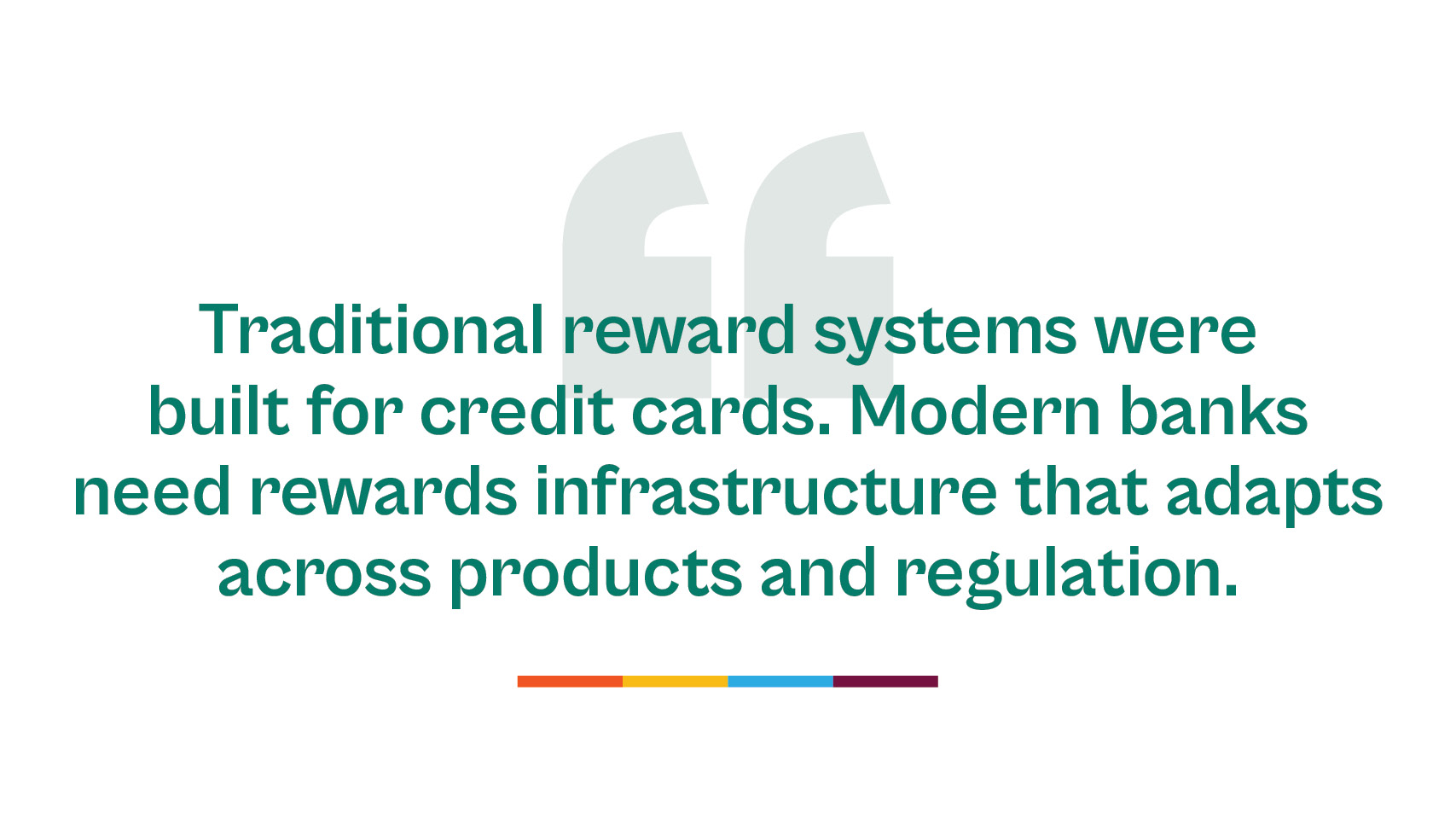
Traditional reward systems were not built for this environment, but rewards-as-a-service for banking is designed for precisely this.
What Makes a Successful Loyalty Program Today?
A successful loyalty program in banking is no longer defined by the number of loyalty points issued. It is defined by measurable impact.
A successful loyalty program:
- Promotes customer satisfaction
- Engages customers beyond transactional incentives
- Supports customer retention
- Improves net promoter score
- Enhances customer lifetime value
- Aligns rewards with customer expectations
It also acknowledges that customers interact with multiple financial products. Personal and business loans, savings accounts, and deposit relationships all contribute to how customers evaluate their bank. So a great and successful program needs to account for all of this complexity without overwhelming the institution's operations.
Transitioning From Tactical Perks to Strategic Infrastructure
Many financial institutions still treat bank loyalty programs as marketing initiatives. A team negotiates vendor discounts, updates reward catalogs manually, and measures success through short-term campaign metrics. Over time, this approach becomes increasingly complex. Vendor agreements multiply. Customer feedback loops slow down. Reporting requirements expand. What began as a promotional effort quietly turns into an operational burden.
As loyalty programs grow, so does the administrative weight behind them.
Managing reward logic across savings accounts, credit card products, and business services often requires coordination across product, compliance, technology, and marketing teams. Monitoring key performance indicators such as customer engagement, redemption activity, and customer lifetime value adds another layer of oversight. Ensuring robust security measures to protect customer data introduces further responsibility. Is it any wonder real innovation stalls? The way forward is to change the equation entirely.
A rewards-as-a-service model centralizes the logic, reporting, and vendor relationships into a structured system that integrates with existing banking systems rather than competing with them. Instead of maintaining dozens of manually updated agreements and disconnected processes, institutions operate from a unified layer designed specifically for modern loyalty programs.
The result is both efficiency and strategic clarity. When reward infrastructure is centralized, financial institutions can launch innovative loyalty programs with greater confidence, respond to customer behavior with greater precision, and adjust incentives without reengineering core systems.
Financial benefits can be delivered in a structured way without altering deposit strategy or complicating funding models.
Over time, this shift from tactical perks to strategic infrastructure strengthens customer relationships while reducing operational strain. It allows banks to reward customers deliberately rather than reactively and to scale their loyalty strategy without expanding internal complexity.
Where Rewards-as-a-Service Fits in the Financial Services Industry
Loyalty programs used to be isolated features, but now they're being embedded in broader customer experience strategies that span savings accounts, credit card activity, business banking, and digital channels.
As customer expectations evolve, institutions are under pressure to make rewards more adaptable, more measurable, and more relevant. Regulatory scrutiny has increased. New financial technology models are emerging.
The conversation around programmable value and stablecoin-aligned incentives is forcing banks to think beyond traditional reward systems.
In this environment, infrastructure matters.
An infrastructure-based rewards model gives financial institutions the flexibility to adjust incentives without rebuilding core systems. It allows them to respond to regulatory change without rewriting product structures. It enables personalized rewards that reflect customer preferences and customer behavior across multiple financial products. And it provides auditability and reporting that satisfy compliance and risk teams without slowing down innovation.
Importantly, this approach does not replace established credit card reward programs or legacy financial loyalty programs. It extends them. It introduces a structured layer that supports both consumer and business use cases, connects rewards across product lines, and scales as the institution grows.
As the financial services sector becomes more digitally integrated, rewards are shifting from promotional add-ons to long-term engagement infrastructure. Institutions that recognize this shift will be better positioned to retain customers, strengthen customer relationships, and adapt their loyalty strategy as the industry continues to evolve.
So, Where Does Proven Fit?
If rewards are becoming infrastructure rather than promotion, how should banks implement them without adding complexity?
Proven was built specifically for this transition. It operates as a rewards-as-a-service layer, allowing financial institutions to deploy vendor-backed, non-deposit rewards without becoming a payments platform or altering core funding structures. The framework separates reward logic from deposit balances, integrates naturally with existing banking systems, and provides reporting aligned with risk and compliance oversight.
For banks modernizing their loyalty strategy, particularly those exploring programmable incentives, this structure helps strengthen customer satisfaction and retention without increasing balance-sheet exposure. The result is a more durable rewards model that supports business growth while protecting financial stability.
Conclusion
The discussion surrounding loyalty in banking is evolving. As programmable value, clearer regulations, and digital demands influence the market, institutions need to consider more carefully how they design and provide rewards.
The focus has shifted from whether to offer incentives to how to structure them effectively to align with long-term goals instead of short-term promotions.
Banks that approach rewards with infrastructure in mind will be better positioned to adapt as the financial services landscape evolves. They will have the flexibility to adjust, measure impact, and scale without rebuilding core systems each time the market changes.
If your institution is reassessing its loyalty strategy or preparing for a more programmable rewards environment, now is the time to evaluate the underlying structure.
See how Proven’s rewards-as-a-service platform can support your next phase of customer engagement.


Browse more topics from this article
Heading 1
Heading 2
Heading 3
Heading 4
Heading 5
Heading 6
Lorem ipsum dolor sit amet, consectetur adipiscing elit, sed do eiusmod tempor incididunt ut labore et dolore magna aliqua. Ut enim ad minim veniam, quis nostrud exercitation ullamco laboris nisi ut aliquip ex ea commodo consequat. Duis aute irure dolor in reprehenderit in voluptate velit esse cillum dolore eu fugiat nulla pariatur.
Block quote
Ordered list
- Item 1
- Item 2
- Item 3
Unordered list
- Item A
- Item B
- Item C
Bold text
Emphasis
Superscript
Subscript
Heading 1
Heading 2
Heading 3
Heading 4
Heading 5
Heading 6
Lorem ipsum dolor sit amet, consectetur adipiscing elit, sed do eiusmod tempor incididunt ut labore et dolore magna aliqua. Ut enim ad minim veniam, quis nostrud exercitation ullamco laboris nisi ut aliquip ex ea commodo consequat. Duis aute irure dolor in reprehenderit in voluptate velit esse cillum dolore eu fugiat nulla pariatur.
Block quote
Ordered list
- Item 1
- Item 2
- Item 3
Unordered list
- Item A
- Item B
- Item C
Bold text
Emphasis
Superscript
Subscript
Heading 1
Heading 2
Heading 3
Heading 4
Heading 5
Heading 6
Lorem ipsum dolor sit amet, consectetur adipiscing elit, sed do eiusmod tempor incididunt ut labore et dolore magna aliqua. Ut enim ad minim veniam, quis nostrud exercitation ullamco laboris nisi ut aliquip ex ea commodo consequat. Duis aute irure dolor in reprehenderit in voluptate velit esse cillum dolore eu fugiat nulla pariatur.
Block quote
Ordered list
- Item 1
- Item 2
- Item 3
Unordered list
- Item A
- Item B
- Item C
Bold text
Emphasis
Superscript
Subscript
Heading 1
Heading 2
Heading 3
Heading 4
Heading 5
Heading 6
Lorem ipsum dolor sit amet, consectetur adipiscing elit, sed do eiusmod tempor incididunt ut labore et dolore magna aliqua. Ut enim ad minim veniam, quis nostrud exercitation ullamco laboris nisi ut aliquip ex ea commodo consequat. Duis aute irure dolor in reprehenderit in voluptate velit esse cillum dolore eu fugiat nulla pariatur.
Block quote
Ordered list
- Item 1
- Item 2
- Item 3
Unordered list
- Item A
- Item B
- Item C
Bold text
Emphasis
Superscript
Subscript
Heading 1
Heading 2
Heading 3
Heading 4
Heading 5
Heading 6
Lorem ipsum dolor sit amet, consectetur adipiscing elit, sed do eiusmod tempor incididunt ut labore et dolore magna aliqua. Ut enim ad minim veniam, quis nostrud exercitation ullamco laboris nisi ut aliquip ex ea commodo consequat. Duis aute irure dolor in reprehenderit in voluptate velit esse cillum dolore eu fugiat nulla pariatur.
Block quote
Ordered list
- Item 1
- Item 2
- Item 3
Unordered list
- Item A
- Item B
- Item C
Bold text
Emphasis
Superscript
Subscript




.png)


